

Baptist Associations: Learning from the Past
Introduction
As Baptists thinking about associations and denominations, we should desire to learn from the past. How have Baptists in the past formed groups, what has worked about those groups, and what has not? I want to put forward a brief history, general observations, and lessons from Baptist associations in England and America from the 17th to 19th century.
Historical Overview
England
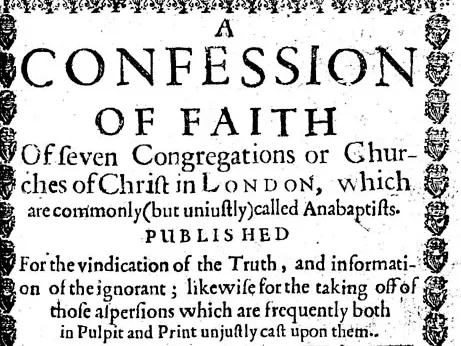
Both General (Arminian) and Particular (Calvinistic) Baptists formed associations in 17th century England. The Midland Association of Particular Baptist churches was formed in 1655 in Warwick. With their association, they purposed to: (1) give deliberation and advice like in Acts 15; (2) send gifted brethren to encourage and edify churches like the church at Jerusalem sent Barnabas to Antioch in Acts 15:22; (3) help poor churches financially like the churches of the Gentiles did for Jerusalem (Rom 15:20); (4) join in the work of the Lord (see 2 Cor 8:19-23); and (5) watch over each other for good in doctrine, love, and life, as members of the same body (1 Cor 12:12).[1] Their confession of faith was a very brief, faithful summary of Calvinistic Baptist doctrine.[2]
Soon after William of Orange overthrew King James II, and brought in the Act of Toleration in the year 1689, ensuring religious freedom for Baptists, the Particular Baptists in London invited all the like-minded churches to join an Assembly. Between 1689 and 1693/4 the Association met yearly to pray, hear reports from churches, and give advice and answers to questions. The Association promoted the 1677 (1689) Confession of Faith, started a fund for poor bi-vocational pastors whose churches could not fully support them, and published a catechism revised from the Westminster Shorter Catechism. The London Association multiplied and formed another association in Bristol in 1692. Bristol became the site of the Bristol Baptist College, the earliest Baptist Seminary. Unfortunately, the London Association did not last long due to a controversy about hymn-singing which caused division, and waning interest in the Association and the pastor’s fund.[3] It fizzled out by 1695.[4] This was not the end of Baptist associations, however.
Regional associations of Particular Baptists in England continued to operate through the 18th and 19th century. For instance, the Northamptonshire Association, which Robert W. Oliver describes as it existed in 1779:
This association of Particular Baptist Churches had long extended beyond the bounds of the county from which it took its name, and now included churches from Hertfordshire in the south to Nottinghamshire in the north. Its annual meetings were usually well attended, not only by accredited representatives, but also by church members, and even by visitors from other denominations. As well as discussing matters of common concern and listening to reports from all associated churches, the occasion was always marked by the preaching of an Association sermon.[5]
Baptist associations flourished in the 18th century despite debates among Baptists about open versus strict (closed) communion. This debate did not become an issue that divided churches into different associations, until the 19th century, when both the communion issue and hyper-Calvinism became issues that separated Baptists.[6] Many different associations were formed in this time and the Baptists gradually moved away from their earlier doctrinal standard (the 1689 confession) to the point where it was not a factor in their associations in the 19th century.[7] The Baptist Union was formed in 1813 on Calvinistic doctrinal foundations, but its purpose was very vague and it drifted into liberalism and Arminianism by the end of the 1800s.[8] Charles Spurgeon’s controversy with the Baptist Union over these theological matters is well-known.
America
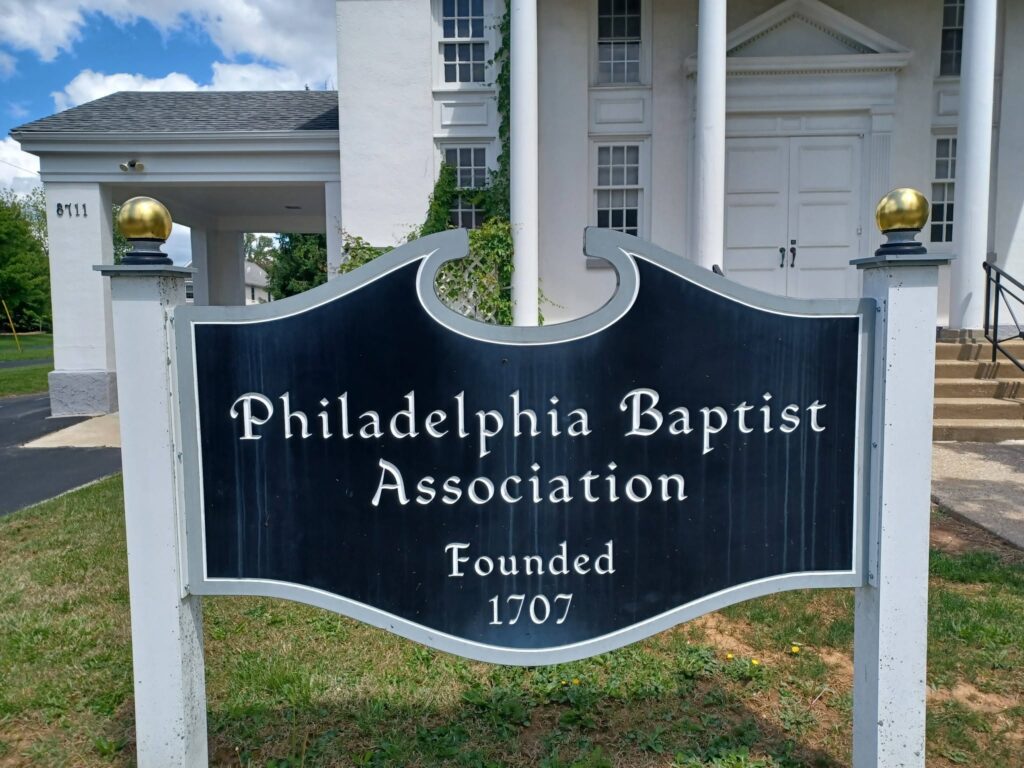
The first Baptist association in America started under the influence of Elias Keach, son of the prominent English Baptist Benjamin Keach. There were a number of Welsh Baptists operating in the area as early as 1683. Keach came to Philadelphia from England as a Baptist preacher, but was truly converted while preaching a sermon there. He became the pastor of Pennepack Baptist Church in Philadelphia, and started a number of other churches in New Jersey and Delaware through his itinerant preaching. These churches formed the Philadelphia Baptist Association in 1707. Chute, Finn, and Haykin note that “This association became the pattern for numerous other Particular Baptist associations, including the Charleston Association.”[9] The Philadelphia Association flourished throughout the 18th century and in 1742, they officially adopted the Second London Confession of Faith as their confessional standard, which they renamed the Philadelphia Confession.[10] The area they covered stretched from the state of Virginia to the state of New York. Eventually, many other regional associations were formed from it. The Association normally met on a Tuesday in late September, and would hear one of the pastors preach and deliberate on projects, issues, and questions. They would send out a letter to the churches afterwards with any exhortations and news that seemed pertinent.[11] In addition to normal associational proceedings, they sent out local and foreign missionaries, started colleges, supported political/moral causes like the Revolution and temperance, and published books.[12]
Other Baptist conventions and organizations were formed throughout the 18th and 19th centuries. Unfortunately, the issue of slavery was a main factor in the formation of the Southern Baptist Convention in 1845, which split off from the earlier Triennial Convention (1814).[13] These Northern and Southern groups “foreshadowed the differences between the North and South sixteen years before the American Civil War began.”[14]
Though this is a very brief historical overview, looking at the first two hundred or so years of Baptist associations can help us acquire a basic sketch of the prominence and function of associations in Baptist life, almost from their inception.
Observations
The following paragraphs will contain some observations as to the purposes, authority, basic function, confessional boundaries, and issues with Baptist associations.
Purposes
Some common purposes for Baptist associations historically included (1) mutual encouragement, fellowship, and unity; (2) joining for the advance of the gospel; (3) advice and accountability when discipline issues, differences, and difficulties, arose in or between churches; (4) a united answer to theological and practical questions; (5) financial support of poor pastors and churches; and (6) combined effort in missions, education, publishing, and ethical/political activism.
Authority
Authority and autonomy were big issues for the Baptists. They had been persecuted under a dominating State Episcopal Church, and when they finally got their liberty, they were able to form their own ecclesiastical groups on freer foundations. From the very outset, Baptists always made it clear that their associations were purely voluntary, and they had no ability to impose decisions on churches. This does not mean they never rendered decisions, sent exhortations to individuals and churches, or even removed churches from their associations when they fell outside the bounds of their united beliefs and practices. But they always maintained that each church had authority within itself to govern its own affairs. In the Narrative of the proceedings of the 1689 Assembly in London, they note:
That we disclaim all manner of Superiority, Superintendency over the churches; and that we have no Authority or Power, to prescribe or impose any thing upon the Faith or Practice of any of the Churches of Christ. Our whole Intendment, is to be helpers together of one another, by way of Counsel and Advice, in the right understanding of that Perfect Rule which our Lord Jesus, the only Bishop of our Souls, hath prescribed, and given to his Churches in his Word.[15]
They also note that in points where churches within the association differ in their principles and practices, they would not impose differently on them but leave them to their liberty, and that when offences arose between churches or within churches, they would see to it that the Rule of Christ in Matthew 18:15-20 would be followed and the consent of the church/churches would be sought before they convened about it and rendered a non-binding decision. They would also ensure that all counsel and advice be firmly rooted in Scripture itself.[16] Samuel Jones, who was very involved with the Philadelphia Association, wrote: “The delegates thus assembled are, properly speaking, only an advisory council. They are not armed with coercive power, to compel the churches to submit to their decisions, nor have they any control over the acts or doings of the churches. Every church still remains independent.”[17]
Basic Function
Baptist Associations in England and America in the first 150 years generally operated in the same basic way. They held one annual meeting, usually one or two days long, but sometimes for several days. Sometimes a day of prayer to seek the Lord was held before a day of reports and deliberations. Approved “messengers” from the churches were sent to the assembly. Usually two or more messengers were sent from each church, often at least one of them being a pastor/minister. At the meeting, there was often a time for one of the pastors to preach an association message. There were letters or reports given from each of the churches, and then time to discuss and decide on a number of questions, issues, and operations. No clear structure of leadership is apparent in the early particular Baptist associations. However, Samuel Jones wrote in 1805: “For the maintenance of good order, the associated body when met, should choose a Moderator, to regulate, and bring forward what is to come before them, and to preside in their deliberations: as also, a Clerk, to take minutes of their proceedings.”[18] It would seem that the moderator and clerk were not permanent or termed positions, but were decided upon at each annual meeting. At times, committees were formed to deal with certain tasks. For example, several brothers were chosen at the 1689 assembly to take care of the Fund for poor ministers. At a later assembly during the hymn-singing controversy, several pastors were tasked with examining the books written and giving their advice on the whole issue.[19] After such assemblies, a letter to the churches was usually sent out containing an encouraging “epistle” to the churches, a narrative of important proceedings, and a brief report of answers to questions in a catechism-like format. The pattern in history seems to be that bigger associations eventually broke off into smaller regional associations. There were many regional associations in Britain and America.
Of course, fellowship, combined efforts, and visits between association churches/pastors would occur throughout the year, but the annual meeting with its messengers was the extent of the government of the association.
Confessional Boundaries
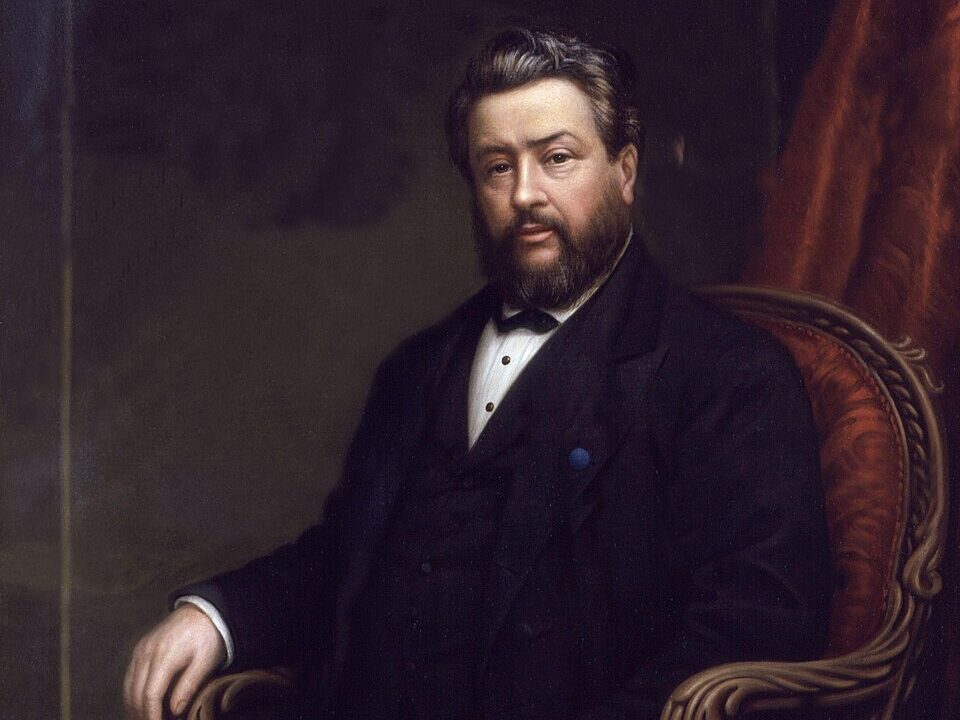
Confessions of faith were frequently produced and promoted by Baptist associations. The Midlands Association had its brief confession. The London Assembly promoted the 1677/1689 confession and it proved useful over the next number of years. However, as Oliver notes, “In all of the attempts to promote union among the churches from the 1830s onwards, no attempt was made to bring the churches back to the original basis of Particular Baptist unity as expressed in the 1689 Confession of Faith.”[20] It is possible that John Gill had an influence in the declining interest in the Confession in England, since he published his own statement of faith and other works which clearly departed from its doctrine on a few points.[21] However, Charles Spurgeon was a zealous proponent of the Confession. Upon his settlement at his church in London, he republished the 1689 and wrote:
“I have thought it right to reprint in a cheap form this excellent list of doctrines, which were subscribed to by Baptist ministers in 1689. We need a banner because of the truth; it may be that this small volume may aid the cause of the glorious gospel by testifying to its leading doctrines…May the Lord soon restore unto his Zion a pure language, and may her watchmen see eye to eye…[The Confession] is not issued as an authoritative rule, or code of faith, whereby you are to be fettered, but as an assistance to you in controversy, a confirmation in faith, and a means of edification in righteousness. Here the younger members of our church will have a body of divinity in small compass, and by means of Scriptural proofs, will be ready to give a reason for the hope that is in them.”[22]
The Philadelphia Association adopted the 1689 in 1742 with two additions. The later New Hampshire Confession (1833) was much shorter and softened its language so that Calvinists and Non-Calvinists could agree to it. Though Baptist groups sometimes differed in their use of confessions, they were an important part of associational life from the beginning. An association had to have clear doctrinal boundaries and set operational practices from its inception.[23] It seems that the 1689 confession was incredibly useful as a robust doctrinal standard for particular Baptists to unite on and when it was forgotten, even Particular Baptists drifted from the clear theology of the past. However, confessions alone were not enough to keep associations together, as evidenced most strongly by the London Association’s quick demise.
Issues
Baptist Associations faced a number of challenges historically. First of all, there was the problem of persecution which kept the Baptists from freely organizing during much of the 17th century. Once the Baptists tasted religious liberty, they were quick to form the London Association and publish their faith freely. Thanks be to God, we exist currently in a time and place where we have complete freedom to practice our religion and associate with like-minded churches.
Second, there was the issue of controversy and division. Even among Baptists who held firmly to such a robust confession as the 1689, there occurred a terribly bitter controversy over specific practices in corporate worship. Looking back on this conflict, it would be hard to believe that anyone in our day would take issue with Benjamin Keach’s position on singing, but it was a debated issue in his day. Perhaps if he and others would have approached the issue in a less public and more irenic fashion, the Assembly would have existed for longer. Doctrinal debates over communion and hyper-calvinism versus Fullerism consumed the 18th-19th century and eventually fractured churches, associations, and the overall witness of Baptists in the UK. Many Baptists in America were involved in the immoral practice of slavery in their day and this also led to the fracturing of Baptist conventions. In a serious and ominous letter in the midst of the hymn-singing controversy, the London Association wrote to the churches:
“Satan endeavours, if he cannot corrupt our heads with false doctrine, to defile our conversation either with a worldly or sensual frame, or to fill us with a spirit of contention and bitterness among ourselves; or towards other saints that differ from us. The holy apostle hath counselled us against his toils, and warned us to look to ourselves, lest any root of bitterness spring up in us. Brethren, ye carry about the relics of the old man, a body of sin and death, against which as against the evil angels you must maintain a continual war. We have reason, we humbly think, thus to caution you, because we fear, nay too much experience, that this day of liberty, though it hath eased us of the yoke of persecution, hath set the devil upon other methods, and given a lure to our corruptions through our want of watchfulness, which too evidently appears in the decay of piety and charity among us, and a general minding of our own things, not the things of Christ.”[24]
If we are to learn from our own history as Baptists, we must not be ignorant of the schemes of the devil which harassed our forefathers. If Satan cannot get us by persecution, he will get us by temptation, false religion, or contention and division.
Third, there is the real issue of doctrinal drift, whether into Hypercalvinism, Arminianism, or Liberalism. It seems that the loss of the 1689 confession as a widely-held standard led to worse and worse doctrinal error among particular Baptist groups in the UK. Hypercalvinism became popular in the 18th century. Then, an association that started Calvinistic quickly became Arminian and liberal in the course of the 19th century. Our history shows how committing to a clear and robust confession has been helpful for Baptist life. Again, having such a confession does not prevent division and temptation, but it does prove helpful as a guideline for doctrinal stability.
Another fourth issue was a general skepticism of some Baptists toward association. Though many Baptists, and probably the vast majority throughout history, have been favourable to associations, there certainly have been Baptists that argued against associations, emphasizing the independence of the local church to an extreme.[25] Most Baptists have seen precedent in the New Testament for association, the clearest example being the Jerusalem council in Acts 15. Add to this the numerous ways we see fellowship enacted between churches in the New Testament (for prayer, mission, and benevolence), the biblical emphasis on the unity of believers, and the utter necessity of help and cooperation for churches to function well and advance in their mission.
Baptists have long realized that we cannot do this alone, and therefore associations are a benefit and a blessing, despite their difficulties. Associations have been a beneficial way for Baptists to encourage one another, help each other spiritually and financially, and build institutions that have lasted many years. They have helped produce Baptist missionaries, seminaries, books, and positive changes in society.
Conclusion
May we learn from the past, which proves how central and beneficial associations were to Baptist life and also highlights some of the problems that we ought to avoid by God’s grace. As we consider association, let us pray for wisdom and grace from God our Father and our Lord Jesus Christ, that by the Holy Spirit we may be used for his eternal kingdom.
[1] See A History of the Baptists by John T. Christian, ch. XIX (https://www.reformedreader.org/history/christian/ahob1/ahobc19.htm).
[2] Their confession is available here: https://www.reformedreader.org/ccc/midland.htm.
[3] Benjamin Keach was a central figure in the controversy, arguing ardently for corporate hymn-singing as an element of biblical worship. Several books were written between him and the other side. The association tasked several men with examining the controversy, and they argued that Keach and others had used uncharitable and un-Christian language toward one another and that their books contained misrepresentations of one another. They were ordered to stop writing, selling, and purchasing the books, and to bring them to a certain brother who would obliterate them. Keach sent a letter with apologies for all his uncharitable statements, but noted that he would re-publish his book with the offensive material removed. The committee also apologized for faults on their end, and exhorted Keach not to continue publishing and writing on the subject. This history is found in James M. Renihan, Faith and Life for Baptists: The Documents of the London Particular Baptist General Assemblies, 1689-1694 (Palmdale, CA: Reformed Baptist Academic Press, 2016), 85-119.
[4] James Renihan notes that there is evidence that a meeting took place in 1694. Renihan, Faith and Life for Baptists,16 f.n. 3.
[5] Robert W. Oliver, History of the English Calvinistic Baptists: 1771-1892 (Edinburgh, UK: Banner of Truth, 2006 repr. 2024), 38.
[6] “The Particular Baptist denomination remained divided on the terms of communion but the two sides within the denomination agreed to differ…There is no evidence whatsoever to suggest that when the issue of communion was discussed during the eighteenth century, those who participated in the debate envisaged two separate ecclesiastical groups…The various local associations’ evangelistic enterprises did not insist on a particular practice in their doctrinal statements. When the Missionary Society was established in 1792, its committee included open communionists such as John Ryland, Jr. and strict communionists such as Andrew Fuller” (Ibid., 87).
[7] “The nineteenth century saw many attempts to draw the Calvinistic Baptist churches together. Sadly the overall result was to fragment the witness of those Baptist churches which loved the doctrines of grace. While the largest organization, the Baptist Union, was drifting towards Arminianism, churches with a real commitment to the sovereignty of God in salvation were dividing over church order and, in their grasp of the doctrines of grace, were moving away from the theological position of their seventeenth century predecessors. In all of the attempts to promote union among the churches from the 1830s onwards, no attempt was made to bring the churches back to the original basis of Particular Baptist unity as expressed in the 1689 Confession of Faith. The various discussions took place as though that Confession had never existed” (Ibid., 335-336).
[8] “Like the aims of the Triennial Convention, the goals of the General Union were almost too broad to be realistic. In addition to promoting Sunday schools, itinerant preaching, and fund-raising for church buildings, the annual meetings were designed to address “whatever relates to the real interests of the denomination at home and abroad.” The union’s ambitions exceeded the interests of Particular Baptists, and support waned for the first fifty years of its existence. In addition to the independent spirit of Particular Baptists and broadly defined focus of the General union, theological issues hindered immediate connectionalism” (Oliver, History of the English Calvinistic Baptists, 132).
[9] Anthony L. Chute, Nathan A. Finn and Michael A. G. Haykin, The Baptist Story: From English Sect to Global Movement (Nashville, TN: B&H, 2015), 55.
[10] “…though two chapters were added: chapters 23 and 31 on the necessity of congregational singing and the imposition of hands respectively, both of which can be traced back to personal convictions of Elias Keach” (Chute, Finn, and Haykin, The Baptist Story, 55).
[11] For instance, they address the issue of lukewarmness and dullness in the churches a number of times, which had been a common complaint of the messengers.
[12] For the history of the Philadelphia Association, see A. D. Gillette, Minutes of the Philadelphia Baptist Association, 1707-1807 (https://baptisthistoryhomepage.com/phila.minutes.a.index.html). Concerning the Revolution, he notes that Baptist associations in America got involved in the political cause of the revolution, because they had suffered much under British laws and an Established church, and they firmly believed in religious/soul liberty. “Having been much ground under the British laws, or at least by the interpretation of them in Virginia, they were, to a man, favorable to any revolution by which they could obtain freedom of religion…The prayer of these was, that the church establishment should be abolished, and religion left to stand upon its own merits; and, that all religions societies should be protected in the peaceable enjoyment of their own religious principles.”
[13] The Triennial was so named because they convened every three years, and it was a convention mostly formed to support missions.
[14] Chute, Finn, and Haykin, The Baptist Story, 152.
[15] Renihan, Faith and Life for Baptists, 34.
[16] Ibid.
[17] Samuel Jones, Treatise on Church Discipline (c. 1805) chapter XII (https://founders.org/library/treatise-of-church-discipline-jones/).
[18] Jones, Treatise on Church Discipline, XII: 12.
[19] These pastors examined the books with great diligence, even noting the page and line numbers where every offensive statement was contained (Renihan, Faith and Life for Baptists, 94-95).
[20] Oliver, History of the English Calvinistic Baptists, 336.
[21] Ibid., 4-12.
[22] Ibid., 339-340.
[23] Samuel Jones advised: “At the first formation of an association, or afterwards, there should be a set of rules, conditions and regulations drawn up, as the ground on which the churches agree to associate together” (Treatise on Church Discipline, XII: 11). This is exactly what the earlier London Association had done at their first assembly.
[24] Renihan, Faith and Life for Baptists, 131-132.
[25] Oliver notes Baptists in the 1800s who opposed associations such as William Huntington, William Gadsby, and J. C. Philpot. Oliver, History of the English Calvinistic Baptists, 332-333.