

Theology

Symbols and Representations of God
On occasion a sermon will stir up more conversations and questions than is typical. This past Sunday was one of those occasions. You can listen or watch the sermon here: No Images: Worshiping the Invisible God in Spirit and Truth. In this sermon I argued that while the first commandment forbids the worship of false gods, the second commandment forbids the worship of the true God in a false way. Therefore, the prohibition against graven images not only applies to…
Book Recommendation: King of Kings
The role of the government and its relationship with the church have been hotly debated over the past several years. The COVID years, a rapidly changing culture, shifting morality, and sharp divisions between political parties have left many Christians longing for some clarity and direction. Complicating matters are nebulous but loaded labels like “Christian Nationalism” which is variously defined and is sometimes used willingly and other times pejoratively. The rancor and hostility that can come with the discussion has left…

Imputed Guilt and Zero-Sum Responsibility
The intersection of human responsibility and God’s sovereignty is a perennial discussion. The Bible teaches both, yet most understand these ideas to be contradictory. It is always a temptation to elevate one and minimize—or “qualify”—the other. We can feel that if we emphasis God’s sovereignty, we necessarily minimize human responsibility, or vice versa. If this is you, it is likely that you misunderstand responsibility. I understand that discussions of this sort can, and often do, get very emotional (and maybe…
Descent Into Hell
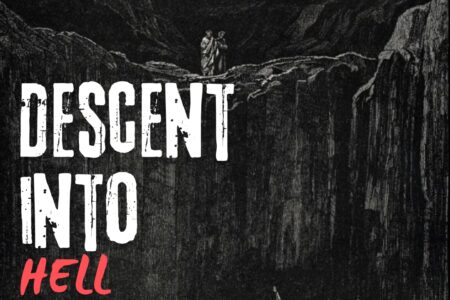
The following article is based on the sermon Descent Into Hell which you can watch or listen to here. Christian thinking can be influenced by culture around us. Today, materialistic naturalism is so prominent in the world of ideas that concepts like angels, demons, spirits, and the underworld seem more like fairy-tale fiction than reality. But the Bible affirms that the unseen world is just a real as what is seen. Human beings are certainly more than physical—we have a…
Israel, the Church, and the Promised Land
What should Christians do with passages of Scripture that speak about the everlasting covenant God made with Abraham and the nation of Israel? Psalm 105:8–11 says, “[The Lord our God] remembers his covenant forever, the word that he commanded, for a thousand generations, the covenant that he made with Abraham, his sworn promise to Isaac, which he confirmed to Jacob as a statute, to Israel as an everlasting covenant, saying, ‘To you I will give the land of Canaan as…
Does God Want Everyone to Be Saved?
It’s not uncommon for inquiring minds to ask: “Does God want everyone to be saved?” The answer might seem obvious to many but there are passages in Scripture that can challenge what we think about God and how he operates. The Challenge Proverbs 16:4 says, “The Lord has made everything for its purpose, even the wicked for the day of trouble.” Romans 9:17–18, “For the Scripture says to Pharaoh, ‘For this very purpose I have raised you up, that I…
Trinity Survey Results
I want to say thank you to everyone who filled out the survey. Roughly 1/3 of our congregation completed the survey. This has been helpful to me to pick an area of focus for a research project and sermon series that I’ll be preaching in March, 2024. We’ll be considering the person of the Son from John 1 and John 5 and how that helps us see the triune nature of our God. I wanted to share the survey results…
A New Testament Case for the Christian Magistrate to Enforce Biblical Law in Accordance With the Gospel
Summary: In 1 Timothy Paul urges the church to pray for kings and rulers so that they would be converted, legislate according to the law of God, thus bringing peace to the church and serving the advance of the gospel. In Paul’s first letter to Timothy, he opens his letter by addressing teachers who do not understand the proper use of God’s law (vv. 3–7). In response, Paul argues, not for antinomianism, but for the proper use of the law.…

The Proper Recipients of Baptism
Introduction From the time of the Reformation, the dispute has risen, sometimes to fever pitch, regarding the proper recipients of Christian baptism. The magisterial reformer, John Calvin, gave theological expression to the protestant practice of infant baptism, and on the other hand, the radical reformers argued that believer’s baptism is the proper expression of baptism in the Christian era. Today the debate still continues, and while it is regarded as a more intramural debate than it has in previous generations,…
Divine Sovereignty and Human Responsibility
Introduction The Bible portrays God as having and exercising sovereign control over all things, even the free acts of men, yet man is held morally responsible for their sinfulness. If God determines human actions, how are humans held morally responsible for them? How can he place blame when no one can alter his plan made from eternity past? Must people simply accept the biblical claim that God is absolutely sovereign and man is morally culpable, even if it cannot be…
For Whom Did Christ Die?
Introduction The extent, or better, the intent of the atonement is “one of the most controversial teachings in Reformed soteriology.”[note]R. A Blacketer, “Definite Atonement in Historical Perspective,” in The Glory of the Atonement: Biblical, Historical & Practical Perspectives: Essays in Honor of Roger Nicole, ed. Charles E. Hill and Frank A. James (Downers Grove, IL: InterVarsity Press, 2004), 304.[/note] There are numerous textual and logical arguments used and abused by proponents who enter the debate. Heated discussions go back and…