

Sermons by Tim Stephens
Tim Stephens is the senior pastor of Fairview Baptist Church, Calgary, Alberta. Tim grew up on a farm in Eastern Ontario, graduated with a Computer Engineering degree from Queen’s University, a Masters of Divinity degree from Detroit Baptist Theological Seminary, and a Doctor of Ministry in Expository Preaching from The Masters Seminary. He is happily married to Raquel and they have been blessed with nine children.
Don’t Steal: From Sin to Dominion in Christ
In this message on the eighth commandment we explore the profound breadth of what God prohibits: not only outright theft of possessions, but also cheating, exploiting others, withholding fair wages, piracy, kidnapping, and even robbing God himself. Far more than forbidding wrongdoing, this command protects the God-given right to personal property and freedom as the foundation for exercising dominion in his created order. We also see that the gospel transforms us: we turn from theft and become givers through hard…
Hate the Sin, Love the Savior
In this message from our series on the Ten Commandments, we examine the seventh commandment—”You shall not commit adultery” (Deut. 5:18)—and discover why sexual sin in all its forms (lust, fornication, adultery, and more) is especially heinous: it deserves death, desecrates covenants, destroys families and nations, debases individuals, damns souls, and disgraces God. Yet the gospel offers radical hope: through Christ’s forgiveness, we find power to flee temptation, guard our hearts, love our spouses, and glorify God in our bodies.…
Don’t Murder: A Command for Life in a Culture of Death
In this message on the sixth commandment we explore its deep and far-reaching meaning. Far more than prohibiting physical killing, this command forbids heart attitudes like anger, hatred, slander, envy, and retaliation that harm others and violate God’s image in humanity. It protects the sanctity of human life from conception to natural death, addressing issues such as suicide, euthanasia, and abortion while affirming biblical allowances for just war, self-defense, and capital punishment. Ultimately, the commandment calls us not only to…
Honoring Father and Mother: The Weighty Command
The fifth commandment acknowledges the family as the foundational institution of human life and society. It is to be honored. This sermon explains what honoring means and gives five practical ways this command is lived out. In addition, we consider five reasons to motivate obedience. May this encourage us to be salt and light, honoring our parents to the glory of God.
Work Six Days, Rest in Christ: Honoring the 4th Commandment
In this sermon we explore how the Old Testament Sabbath—rooted in God’s creation rest and Israel’s redemption from Egypt—serves as a shadow pointing to its fulfillment in Jesus Christ, the true Lord of the Sabbath. While the Sabbath has passed away in the new covenant, its principles endure in the Lord’s day, the day commemorating Christ’s resurrection and finished work. This divinely appointed day calls us to cease from weekly labors, gather for worship, feed our souls through the word,…
Not in Vain: Honoring the Name Above Every Name
This sermon on the third commandment lists eight negative violations to avoid. and positively calls us to declare and praise the exalted name of Jesus, perform all good works in his name, and suffer well for his sake. The context of grace reminds us not to despair over failure but to rest in Christ’s mercy, which itself glorifies his name as he saves and transforms unworthy sinners.
No Images: Worshiping the Invisible God in Spirit and Truth
This sermon expounds the Second Commandment, showing that while the First Commandment forbids worshiping false gods, the Second forbids worshiping or representing the true God in any false way. The sermon considers six reasons for this prohibition before considering how the commandment both prohibits images in worship (including nativity scenes, crucifixes with Jesus, children’s Bible illustrations of Christ, etc.) and commends knowing and worshiping God through his self-revelation in Scripture and in the living Word, Jesus Christ.
Grace Before Law: The Gospel According to Moses
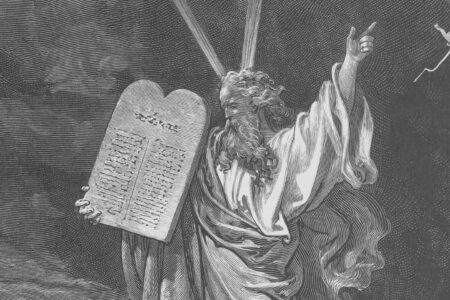
The beginning with the Ten Commandments must be understood in its proper context of grace rather than as a burdensome list of rules. The introductory context emphasizes that the historical setting and theological context frame the law as a gift to an already-redeemed people. Most crucially, God’s own preamble highlights his identity and saving grace before any command, showing that obedience flows from loving gratitude for redemption, not as a means to earn it. This pattern of grace-first-then-law is echoed…

To Us a Child is Born | Part 4: Everlasting Father and Prince of Peace (Isaiah 9:7) | Tim Stephens
This sermon presents the kingdom of God as Scripture’s central theme. Christ’s kingdom is inaugurated through his death and resurrection, presently advancing through the gospel, and will be consummated at his return. From Isaiah 9:6–7, we see seven truths about this kingdom providing believers hope, comfort, and assurance in Christ’s victorious reign.
For To Us a Child is Born | Part 3: Our Everlasting Father and Prince of Peace (Isaiah 6:9)
This sermon on Isaiah 9:6 explores the final two messianic titles given to Jesus Christ. “Everlasting Father” highlights Christ’s eternal existence as God, while “Father” describes his functional role rather than his ontology. Jesus is the father of creation (through whom all things were made), the father of believers (birthing spiritual life and protecting his people), and the father of the age to come (ruling the restored future). “Prince of Peace” portrays Jesus as the divine ruler who brings comprehensive…
To Us a Child Is Born | Part 2: Our Wonderful Counselor and Mighty God (Isaiah 9:6)
Description: Isaiah 9:6 proclaims that the child born to usher in light, joy, liberty, and peace is Jesus Christ. Defending the prophecy’s fulfillment against skeptics, the sermon considers Jesus’ majestic titles, focusing on “Wonderful Counselor” (the source of divine wisdom guiding creation, redemption, and history), and “Mighty God” (evidence of his full deity, demonstrated in Scripture and his works). Ultimately, this child is “given to us” personally—for sinners to receive by faith as their own Savior, Lord, and King. Here is…
To Us a Child is Born | Part 1: The Light of Christ (Isaiah 9:1-5)
In this sermon on Isaiah 9:1–5, we’re reminded that Jesus Christ is the promised child and great light who dawns upon a people living in deep darkness—whether national, societal, or personal. The Scriptures reveal that Christ’s kingdom is inaugurated through his sacrificial death and victorious resurrection, turning darkness into light as sinners repent and believe the gospel. We consider five glorious effects of this gospel light in the lives of those who embrace Christ: multiplication of life, irrepressible joy, heartfelt…